Wednesday, September 4, 2013

Chickens and Eggs

Last week (or a little longer), one of our readers asked for any books that might accompany the installation of a school chicken coop, so we've been doing a little digging. We haven't found a whole lot of what we would call high-quality picture books for kids that relate specifically to raising chickens, but chickens and eggs in general...well, we do have some suggestions for addressing those topics.

In the "Oldies but Goodies" category, we want to highlight two books in particular: Ruth Heller's Chickens Aren't the Only Ones and Chicken an Egg, by Christine Back & Jens Olesen. I'm going to date myself a bit by saying that I used both of these in my own 2nd grade classroom each spring when we studied oviparous animals ...and hatched chickens with the support of our local agricultural  extension (who provided the incubators and eggs!).

My favorite for showing the development of a chicken was Chicken and Egg, with its full-color photographs and two layers of text. It appears to be out of print, but  is available in paperback through a number of venues (including Amazon, linked above). Chicks & Chickens, by Gail Gibbons and From Egg to Chicken, by Anita Ganeri are newer (2005 & 2006, respectively) and also offer insights on chicken development. These two  include a great deal of extra information on chickens in general. Chicks & Chickens addresses their physical characteristics and behavior in addition to their life cycle and egg development. In this book, Gibbons follows her typical style of including a lot of information supported by detailed illustrations in bold colors that tend to extend the text though the use of diagrams. From Egg to Chicken is a more traditional non-narrative informational text, including a table of contents, bolded key words, a glossary, suggested resources, and even an index. It would engage kids through the vivid photographs of chickens and the accompanying captions. Both Chicken and Egg and Egg to Chicken could be used with younger students, and while the book by Gibbons could be read aloud to just about anyone, the text is probably most appropriate for 3rd graders. 


Chickens Aren't the Only Ones appears to remain a popular despite its age. It, however, goes beyond chickens to mention all sorts of animals that lay eggs. Birds, reptiles, amphibians, and fish...snails, spiders, and all sorts of insects are addressed, though not in any detail, making it a great introduction to the concept of oviparous animals. Another great addition to a lesson on egg-layers is a 2007 NSTA Oustanding Science Trade Book winner, Guess What is Growing Inside this Egg, by Mia Posada. This book is illustrated so that the reader gets clues (in verse) about the kind of animal growing in the egg, and when the page is turned, the full illustration reveals the animal, accompanied by a detailed description (not in verse) about the newly hatched animal. An Egg is Quiet, by Dianna Aston would be a great companion book to use with Guess What's Growing Inside this Egg, though Aston's book focuses just on the eggs themselves. The only tricky part of An Egg is Quiet is that its primary layer of text is written in cursive, making it tough for kids to read independently. However, the illustrations are all labeled in more typical printed text, and so a lot of information can be gleaned without paying attention to the lines written in script. Aston compares the shape, size, colors, texture, and markings of eggs, and takes a page or two to highlight the in-egg development of chickens, salmon, and grasshoppers. Sylvia Long's stunning illustrations make this book a work of art as well as a means of obtaining both textual and visual information.


Finally, I couldn't let the chicken and egg topic go without mentioning One Hen: How one Small Loan Made a Big Difference, by Katie Smith Milway. This book is geared a little more toward social studies in general and economics in particular. But, it tells the story of Kojo, a youngster living in the Ashanti region of Ghana, in Africa, and how he uses a few coins to buy a hen...and then sells the extra eggs at market...and then buys more hens...and then a farm (after he goes to school of course!)...and eventually chages the lives of his family, community, and town. Best of all, it's based on the true story of Kwabena Darko; check out this related video on YouTube!


Thursday, August 22, 2013

The Start of School - Nothing to Sneeze At

Even though it's not yet Labor Day - the signature date for the end of summer in many areas - teachers are two weeks into the school year here in Knoxville. It's back to basking in the glow of fluorescent lights after soaking up extensive amounts of Vitamin D while reading a novel on your back porch or watching grass grow from the bleachers of the T-ball field this summer. The start of school brings visions of classrooms stocked with pencils, glue sticks, new crayons, and hopefully a case of tissues. Yes, it's that time of year when you have to rebuild your germ immunity that may have lapsed over the summer.

Fighting off those ever-present germs in a classroom is nothing to sneeze at (for a brief history of that phrase, check out this explanation). If you want to learn more about sneezing, here is an excellent resource:  Sneeze, by Alexandra Siy and Dennis Kunkel (2007).  Alexandra is an outstanding science trade book author, and I guarantee that kids will love this book! It has the "wow" factor from the full page scanning electron microscope images of items that cause you to sneeze (mites, house dust, goose down, influenza virus) as well as the parts of you involved in sneezing (bronchial tube, skeletal muscle). The images are paired with simple text and pictures of kids sneezing and engaging in activities leading to sneezing (looking for their cat under the couch). So clever! A glossary and information about the book images completes this resource.

As long as we're on the topic of body invaders, I'll include a second one that has perhaps a little more of the ick-factor as far as my kids were concerned: What's eating you? Parasites - The inside story by Nicola Davies (2007). The cartoon-style illustrations do include talking tapeworms and bike-riding fleas, but the text is scientifically accurate (as well as extremely interesting). You may not encounter fleas or tapeworms at your school, but you are most likely already a host for harmless hair mites, and many schools have head lice checks --- it's just science in your everyday life! This book presents information about both harmful and harmless parasitic organisms in a non-threatening (and not overly grotesque) manner, and along the way, contextualizes terms such as habitat, ectoparasite, and endoparasite.

Best wishes for a healthy school year!

Tuesday, August 13, 2013

Snails, Slugs, and Spirals

Our front sidewalk has long been a highway for slugs on humid summer nights, but my barefoot kids (and husband) often forget this when they take the dog out after dark. Usually, their reaction involves words like, "Gross!" "Ugh!" or (on the rare occasion that it is the last straw at the end of a long day) "Salt!" Usually, in true mom fashion, I take that opportunity to remind them about cool slug and snail facts...like those contained in these books. (Well, in two of the books, anyway!)

We highlighted one of Sarah Campbell's books in our very first blog entry, but I want to point out another one here. Wolfsnail: A Backyard Predator, is an informational text told in a clear, simple
fashion that even young elementary students can understand, despite including some complex vocabulary. The large photographs bring the reader eye to eye with this carnivorous snail, and Sarah includes additional wolfsnail facts and a glossary at the back of the book, which is great for teachers who want to be able to answer students' questions about this fascinating snail. And, if you explore Sarah's website a little more, you can find the backstory about how this book came to be (think real life research project sparked by a 3 year old's discovery), a video of a wolfsnail eating, and teaching materials designed for use with the book. All three of my kids (ages 9-17) loved both the video and book!

A nice partner book for this is Joyce Sidman's more poetic Swirl by Swirl: Spirals in Nature. This book combines simple text like, "A spiral is a growing shape. It starts small and gets bigger..." with bold, labeled illustrations of a variety of spirals. Sidman characterizes spirals using words like
"strong," "clever," and "bold," in the primary text, and then, in the last two pages of the book, includes both a definition of a spiral and expanded details about the labeled pictures found throughout. (It also mentions the Fibonacci series, which would go hand-in-hand with Sarah's other book, Growing Patterns!)

Finally, the language arts teacher in me has to mention one of my favorite books from the team of Pamela Duncan Edwards and Henry Cole, Some Smug Slug. The only scientific value I can truly attribute to this book has to do with the circle of life, but the vocabulary is fabulous...particularly in relation to words that start with "s"! This book starts, "One summer Sunday while strolling on soil, with its antennae signaling, a slug sensed a slope." Animals (whose names each start with s) try to warn the slug of the impending doom, but the slug continues sauntering and swaggering and slithering up the slope. I won't ruin the surprise, but suffice it to say that it is no ordinary slope.
 

Friday, August 2, 2013

Insects Part II

Sounds of summer include the songs from ice cream truck, splashing in pools, and as Amy noted in the last post, the buzzing of insects all around. So continuing with that theme, the first book is one that she did not need, as she was surrounded by insects without even trying.

  Insect detective by Steve Voake is a  2010 Junior Library Guild selection which offers primary and early elementary students information about not only insects and their life cycles but also where to look for them. I also like that the text distinguishes between insects and non-insects that kids might find when they are detectives - such as spiders, centipedes and slugs -  by indicating the number of legs for an insect (6). Dual-layer text provides additional information for kids who want to go beyond the main narrative. The watercolor and ink illustrations are just cartoony enough to be engaging without leading to misconceptions. The book ends with a spread entitled "Be an insect detective" with suggestions for capturing insects, such as a beetle trap design.


A familiar sound of summer is the chirping of crickets. A suggestion for a book about these fascinating creatures is from the "Let's Read and Find Out" series. Unlike insects we sometimes consider to be pesky (yet are still such an integral part of the ecosystem), crickets are symbols of good luck in some cultures and are one of the few insects purposefully kept as pets. Let's just not dwell here on the fact that they are also utilized to keep some pets alive, such as retiles and frogs.  Chirping crickets by Melvin Berget is an older book (1998) but still a great resource. As you can see from the cover, the illustrations are more like technical drawings, with some containing labels for specific body parts such as the back and front wings. The cricket's life cycle is depicted with both text and pictures, including how they molt during their nymph stage. This makes for a great comparison with insects such as butterflies for a compare/contrast opportunity. The final page spread includes suggestions for keeping a pet cricket (just for a day) and ways to use cricket chirps to find the approximate temperature. A "Find out more" describes how to make a model of a cricket and a "Do you know?" game about cricket and insect facts.

Finally, although I am not a huge fan of books with anthropomorphic depictions, I'll end here with A cricket in Times Square by George Seldon. This book won a Newbery Award way back in 1961, and yes, the animals do talk, but there is still a bit of contextual vocabulary and accurate information about insects. For example, Chester Cricket is a male who chirps (which is correct -- females do not) and even the word "entomologist" is used in context. There are so many ways to use this book in a cross-curricular fashion! The cultural significance of crickets is described when Mario looks for a cricket cage in Chinatown; additionally, the contrast between the environments of New York City and Connecticut, from where Chester arrived, easily links with geography and habitats. Tie-ins with music are also easy to make with the names of some of the pieces Chester plays. And taking a minute to step back from always having to learn from text, it's just a good book to read for enjoyment! The sounds of summer will be fading soon, and while I won't miss that buzz of mosquitoes, I will definitely miss the music of the crickets.


Friday, July 26, 2013

Insect Poetry


While Kristin has been getting root canals and buying plants to keep her house looking like something out of J.K. Rowling's magical world, I have been teaching two courses a day for the past three weeks. That means I spend a lot of time in my office, quietly reading and grading reflections, discussion board posts, and proposals, and any number of other things. Or, if I'm lucky, I am quietly sitting at home in a comfy chair reading and grading reflections, discussion board posts, and proposals, and any number of other things. At this point in the summer, though, it seems that no matter where I find myself sitting, the noise of insects--particularly the fuzzy rhythmic singing of the cicadas--fills the air. It seems to permeate even the brick and cinder block walls that surround my cozy office, somehow seeping in through the windows like they weren't even there. And for some reason, I find the sound comforting rather than irritating--the wordless poetry of insects. (Probably because I remember when--sometime around 1987-- the creepy red-eyed 13 year periodic ones, pictured above, all came crawling out of the ground surrounding the house I grew up in in Illinois.  Ah...the memories.)

Thankfully, there are some really amazing writers who have written their own poetry capturing the essence of these and other insects in verse. Poets are often so precise in their use of language that their work can be rich in vocabulary and less intimidating that other types of informational text, while remaining scientifically accurate.  Joyful Noise, by Paul Fleischman, is a Newbery Award winning book of poems for two voices that successfully navigates those three characteristics. The title actually comes from the Cicadas poem (read a snippet with this link), which is filled with powerful verbs that mimic the insects' song in a lyrical interplay between the two voices. Honeybees, my all time favorite from this small book, is wonderfully told from two perspectives, a worker and a queen, whose views of life in the hive are vastly different. You do have to watch out for one of the worker's lines, "...slaving away in this hell..." but even kids as young as 2nd grade can quickly pick up on the format for reading these poems (though admittedly the vocabulary would be tough for a 2nd grader to tackle independently!). However, the two voices format also works well for writing about two related, but different, subjects. (Think carnivores and herbivores, plants and animals, stars and planets, tornadoes and hurricanes, etc.)

Insectlopedia, by Douglas Florian, is another insect focused poetry book. Cicadas don't make an appearance here, but other noisy insects like hornets, mosquitoes, locusts and crickets do...alongside their quieter comrades like ticks, mayflies, and army ants. These poems employ a variety of rhyming
patterns and, like Joyful Noise, contain science related vocabulary (parasitic, primeval, swarm, pupa) that somehow seem easier to understand when captured in Florian's simple verse. (For the record, he is a prolific poet and has a number of animal related poetry books...and even one about space!)
 

Joyce Sidman's Song of the Water Boatman & Other Pond Poems rounds out this trio of insect poetry (though Joyce's work includes other pond-habitat related animals, as well!). This 2006 NSTA Outstanding Science Trade Book (and Caldecott Honor) award winner combines the precise language of poetry with additional informational text, presented in the wide margin. (If you click on the book's title, it will take you to Amazon's site for this book where you can "Look Inside" and see an example!) This extra feature really classifies this book in the "dual purpose" genre since you can read the poems, like "Diving Beetle's Food Sharing Rules," and then, if you want to, follow up by reading the short informational paragraph about the predaceous diving beetle (which is really a cool little insect!).


Friday, July 19, 2013

Flower Hunting


When we first moved to our home, our girls said it reminded them of Luna Lovegood's house. Not that we live in a giant rock-shaped castle, but more along the line that we had primarily monochromatic shrubs surrounding the perimeter, including a large one with particularly knobby branches that bend and twist in a style that reminds one of gnarled hands. Even the unidentified tree on the side of the driveway propagates with airy tufts of brown fuzz that stick (unfortunately) in our neighbor's fence. So we started to plant flowers - familiar ones, at that - to brighten the yard. Purchasing flowers reminded me of how little I know about botany, unlike the early settlers who relied so heavily on that practical knowledge for survival.


An outstanding resource for demonstrating the importance of botanical knowledge in colonial times is Deborah Kogan Ray's 2004 book entitled The Flower Hunter: William Bartram, American's First Naturalist.  Recognized by NSTA/CBC as an Outstanding Science Trade Book, this book eloquently presents the life of William Bartram through diary-style entries, beginning with one from his Pennsylvania farm on his 8th birthday in 1747. Bartram's father was a botanist for the king of England, sending seeds back to England from trees in their area, and taught young William to make careful observations of plants. They travelled as far south as Florida and as far west as the Mississippi River, identifying and drawings species. Accounts of William's travels and discoveries (and the French and Indian War), written as if he were authoring the journal entries, are supported with full-page watercolor illustrations. My favorite is an original full-page engraving of a plant he named in honor of his hero, Benjamin Franklin: Franklinia alatamaha. Brief biographies of William and his father are included at the end, along with a full page of the plants they identified and named. In the author's note, Ray includes information about the spellings of places that differed from Bartram's original writings.


An accompanying book that engages children with the flowers in their world is one I happened to find recently at the Knox County library. Ellen B. Senisi's Berry Smudges and Leaf Prints: Finding and Making Colors from Nature describes how to use plants and fruits to make unique art as well as the science behind that art. So many interesting aspects of color are included in this book: historical (the value of purple dye), feelings ('the blues'), and of course scientific (green as camouflage). Each profiled color is described with about three short paragraphs of these aspects, followed by nature-based projects  (leaf prints and spinach ink for green, for example, or pressed flower bookmarks from violets). Making dyes by heating, soaking or from "straight" (as is) plant materials are included. The book ends with full-page spreads of the history of color and additional science facts in a question/answer form ("Why is the sky blue?").

Considering again how reliant people were on their natural surroundings just a few generations ago, both of these books can be used to inform students about both the aesthetic and utilitarian value of plants.


Thursday, July 11, 2013

Teeth

Maybe it was from having a childhood dentist named Dr. Hammer (really) who took the "less is more" approach to novocain, or maybe it's just because I'm a complete wimp about pain, but at any rate, the phrase "root canal" is one I was hoping I'd never have to hear from my dentist. The good news was that I didn't need one. The bad news was that I needed two. So having just endured the first of the set, I thought I'd focus on books about teeth this week.

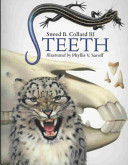
The presentation of information in Teeth by Sneed B. Collard III (2008) is uniquely formatted. Each page spread has a short sentence or sentence fragment in large font, and a specific animal is used to illustrate the statement. For example, one spread begins with "Over time, teeth wear away" and continues with a paragraph profiling the Tuatara, a New Zealand reptile with one set of teeth. The opposite page states, "Some get replaced." On this page, the Cuban crocodile is depicted with an inset showing how a new tooth is ready to replace an exposed tooth. The text explains how the new teeth move into the crocodile's mouth. Other pages describe how teeth help animals eat and where they are located (sometimes on tongues and throats!). Watercolor illustrations fill most of each page, showing some animals in action as they approach their prey and others alone in their habitats. The back page lists resources (books and websites) and also has a glossary, and you can visit Sneed's website to learn more about his background research for books.

Continuing with teeth, let's move on to a toothy animal that is portrayed in most movies as a deadly beast striking fear in the heart of all swimmers and surfers: the shark. Are they really that deadly to humans? According to National Geographic, data from 1996 indicates that people were nearly 3000 times more likely to be injured by a toilet than a shark. I guess you have to just use your imagination about how those injuries occurred because there are no additional details. Clearly, however, sharks get a bad rap because of those high-profile cases in which they actually do injure someone.

 National Geographic's Face to Face series of books includes Sharks by David Doubilet and Jennifer Hayes (2009). As with any production associated with NG, the photographs in this book are amazing. Written in first person by Jennifer, the text reads like a narrative of sea adventures and embeds scientific information about this fascinating species. The brief chapters of this 32-page book include "Meet the Shark" and "Conservation." On some pages, additional sidebar information extends the text with bulleted facts. At the end of the book, several pages are devoted to fast facts, suggested resources, suggested activities to become involved in shark conservation, a glossary, and additional resources. There is also a brief column about how the photographs were taken, which would be of interested to any budding photojournalist.

Consider using these and other books in conjunction with the American Dental Association's free dental health resources. In the meantime, brush and floss, and be grateful for modern dentistry!